MotionSavvy’s UNI Tablet: A Break Through in Sign Language Communication

Brian Meersma over at the Assistive Technology blog reviews some pretty cool stuff.  A recent review profiled the UNI Tablet by MotionSavvy.  This tablet is a break-through in sign-language communication. The tablet will  allow deaf and hearing impaired users to communicate with other people that do not know sign language without an interpreter or slow hand written messages.

The tablet will be released in early 2015.  As with any first generation product, there are limitations and the UNI tablet will sell for  more than $500.00.  That said,  this is an exciting development  and I anticipate that over time, the price will drop and UNI will have additional features and improvements added. If that happens, I can see the UNI being purchased and used by college and university Disability Services offices to enable communication with D/HOH students (although I wouldn’t think of using the UNI as a long-term replacement for an interpreter).

The full post can be read at: MotionSavvy’s UNI Tablet: A Break Through in Sign Language Communication

Building Accessible Documents: A Mix of Use-Now Tips and Build-a-Strategy Resources

This post at TILT is a good “plain English” overview of designing accessibly.

IleneDawn's avatarTILT

Overview

Section 508 [of the Rehabilitation Act] requires that web content be equally accessible to people with disabilities – web applications, pages and all attached files; the requirements apply to course-based as well as public-facing pages that we create to support teaching and learning.

While universities are working to ensure that Learning Management Systems provide an overall accessible platform for sharing and creating content, the creating of learning-related documents posted to those LMSs is the responsibility of instructors, and often of peer learners in a classroom.

Laura Thrasher notes this in opening her post for by eduniverse.org:

“In higher education, maintaining a Section 508 compliant web presence is essential. However, many people assume that a website’s accessibility is the programmer’s responsibility. You might be surprised to learn that content can also impact accessibility. People with visual, hearing, motor, or cognitive disabilities need to navigate your website. Also, they need to understand…

View original post 1,310 more words

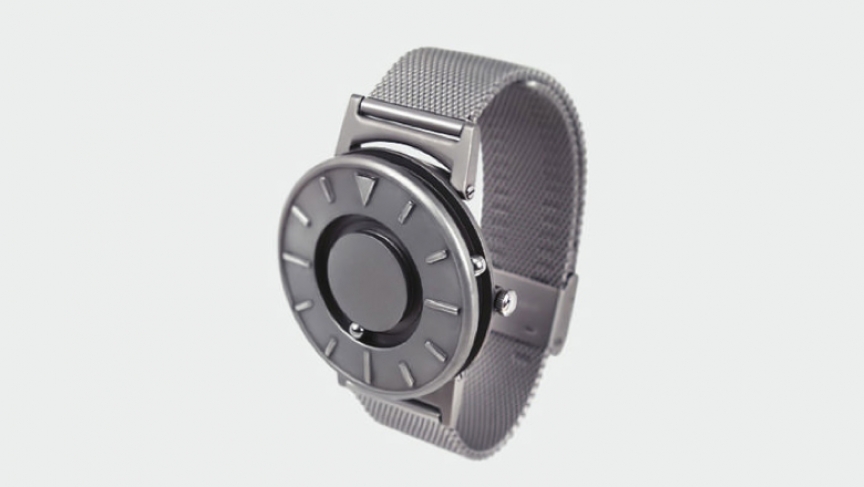
The Bradley Timepiece: Tell Time By Touch

Bradley Timepiece Tell time without sight or sound
Bradley Timepiece: With this timepiece, you don’ need sight to tell time. Credit: Eone Time

Watches designed for visually impaired people often look like any other watch. But they usually have a button on them that tells the time out loud.  The voice also sounds like a robot.   And, some blind people dislike talking watches because it draws attention to them.

To solve this attention-getting problem, the  company Eone Time  has designed a timepiece to help people avoid the attention and just tell the time.

Called the Bradley Timepiece,  it uses magnets, and two moving ball bearings, to allow people to tell time by touch. The innovative design is winning praise for its lack of sound and its different appearance.

The timepiece is named after retired US Navy Lt. Bradley Snyder. While serving in Afghanistan in 2011, he lost his sight in an IED explosion.